Echoes of Freedom
Cetacean Welfare in Captivity
To bring awareness and educate the public about the welfare issues associated with captive cetaceans.
Cetaceans are beautiful marine mammals that inhabit our oceans. Unfortunately, some institutions poach these animals from their home and place them in small concrete tanks to live out the rest of their days. Recently, marine theme parks and zoos have been put under scrutiny for their husbandry practices and there has been a big push for these animals to be returned to the wild. There are, however, certain circumstances where captivity is necessary, such as to provide cetaceans with essential medical care.
Captivity is no place for an animal that is designed to roam the vast oceans
(Hargrove, 2015)
The most common species of cetaceans found in captivity are Orcas (Orcinus orca), Bottlenose dolphins (Tursiops truncatus), and Beluga whales (Delphinapterus leucas) (Themes, 2020).
Orcas (Orcinus orca)

Orcas, also known as killer whales, are the largest members of the dolphin family and are recognized by their distinctive black and white colouring (Hoyt, 2013). They are highly social animals, living in complex social structures known as pods, and are found in oceans all around the globe. Orcas are apex predators, at the top of the food chain, and have a diverse diet that can include fish, seals, and even other cetaceans (Hoyt, 2013).
Bottlenose Dolphins (Tursiops truncatus)

Bottlenose dolphins are perhaps the most well-known cetaceans, famous for their intelligence, playful behavior, and agility. These dolphins have a sleek, streamlined body with a prominent dorsal fin and a bottlenose-shaped snout (Connor et al., 2000). They inhabit warm and temperate seas worldwide and have a complex social structure. Bottlenose dolphins use a wide range of sounds and gestures for communication and have been shown to exhibit problem-solving abilities (Connor et al., 2000).
Beluga Whales (Delphinapter us leucas)

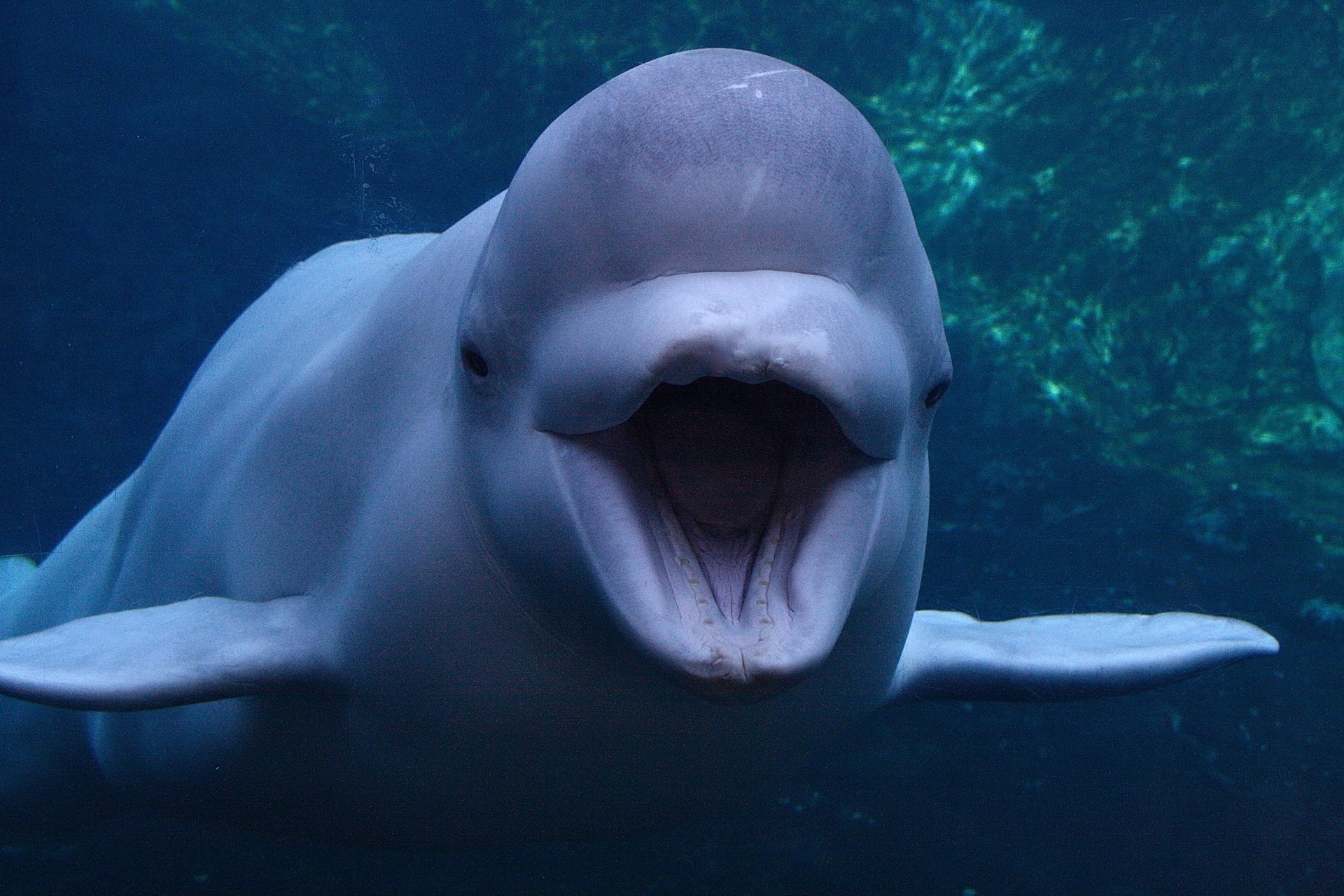
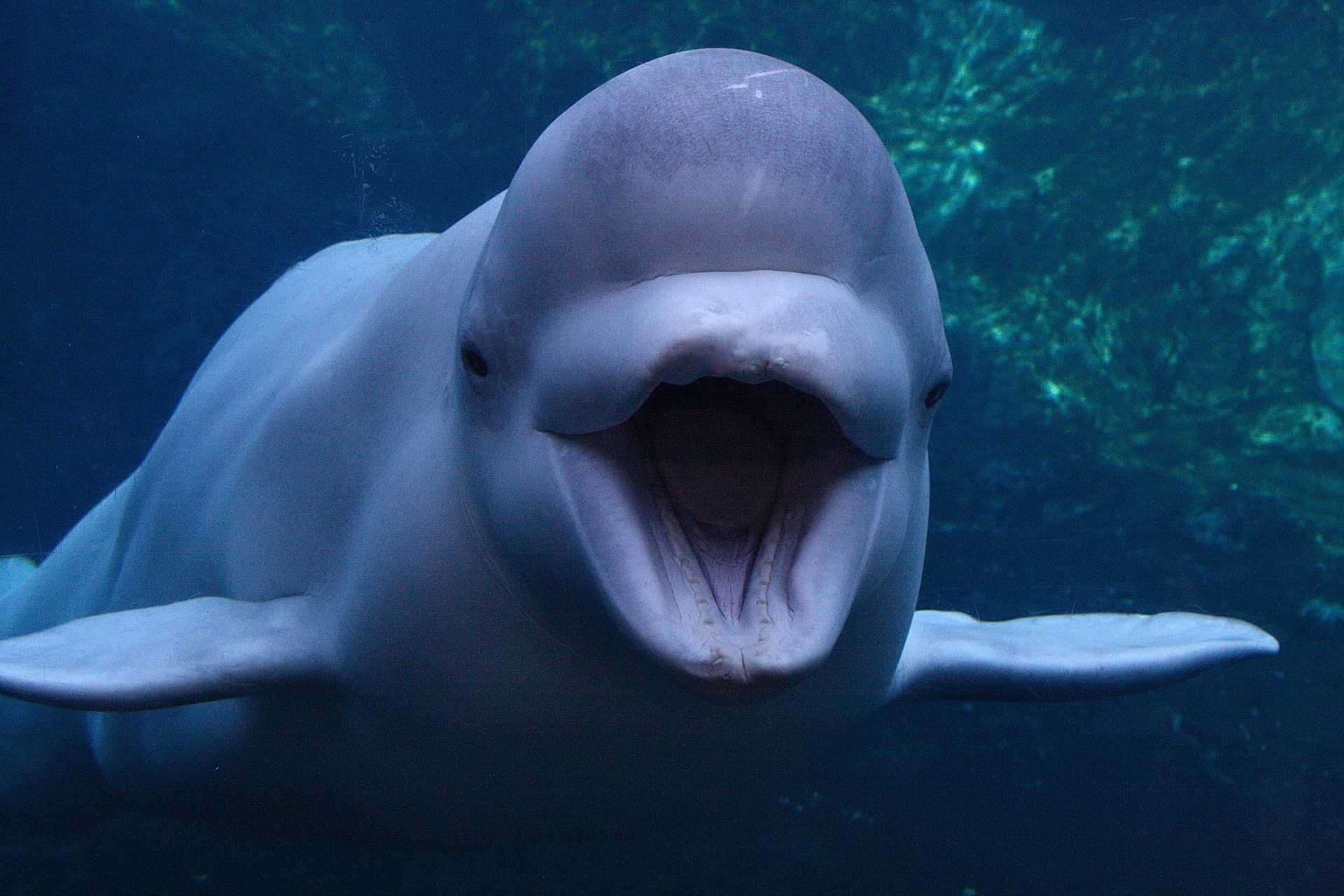
Beluga whales, often called the canaries of the sea due to their wide repertoire of vocal sounds, are easily recognizable by their white colour and the distinctive bulge on their forehead, known as the "melon" (O'Corry-Crowe, 2009). This melon is a mass of adipose tissue that facilitates echolocation, a key element in their navigation and hunting in the murky waters of the Arctic and sub-Arctic regions. Belugas are social animals, living in small groups called pods, and have a diet consisting mainly of fish, crustaceans, and worms (O'Corry-Crowe, 2009).